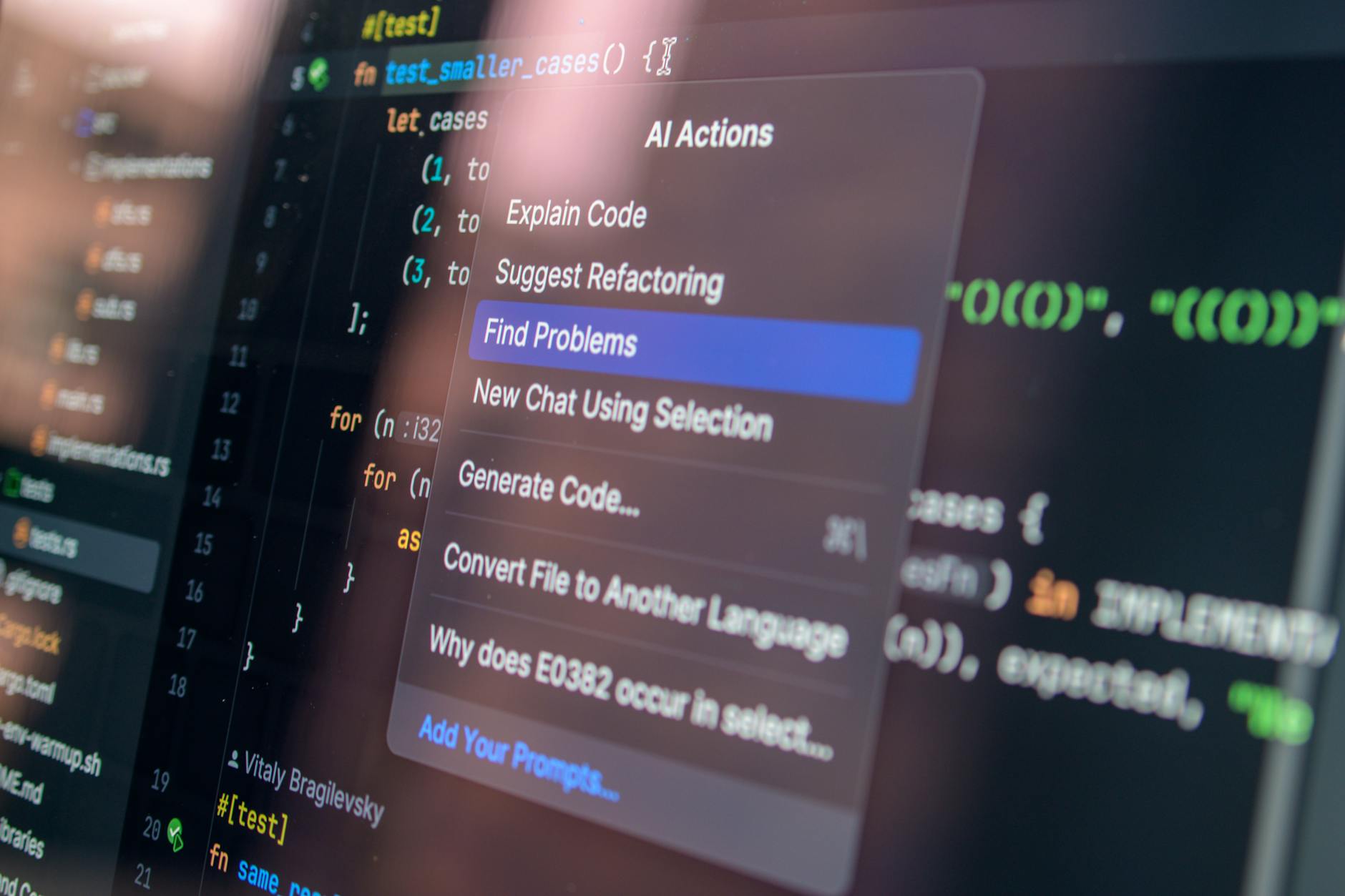
Most business owners in 2026 still treat AI as a faster version of Google Search. They're spending hours 'chatting' with bots, expecting a finished product, only to end up with some generic 80% solution that needs another hour of manual editing. It's a waste of time. This is the prompt-fatigue trap. The reason the best AI tools 2026 provides aren't delivering that promised 10x ROI for most is simple: people aren't moving from generative chat to agentic orchestration. In my experience, the winners have stopped asking AI to 'write a post.' Instead, they're building systems that research, draft, verify, and distribute without being babysat.
How the Best AI Tools 2026 Ecosystem Actually Works
In the current space, the most effective setups rely on a decoupled architecture. Instead of one bulky model doing everything, we're using an orchestration layer like LangChain 4.0 or Haystack to manage Small Language Models (SLMs) for specific tasks. This prevents the 'jack of all trades' syndrome that kills most LLM applications. A solid setup uses a Plan-and-Execute pattern. Here, a primary reasoning engine breaks a goal into sub-tasks and hands them off to specialized agents.
It's much cleaner.
Most implementations break because they're missing a semantic memory layer. Without a properly indexed vector database, your AI is basically an amnesiac. Don't try to cram 50,000 words into one prompt. That leads to context window saturation and a 30% increase in hallucinations. Usually, a successful setup uses Retrieval-Augmented Generation (RAG) to pull just the relevant 500 words for each sub-task. It cuts token costs by up to 70%.
Pro tip: If your agentic workflow takes more than three recursive steps without a human-in-the-loop (HITL) checkpoint, your error rate will likely compound at a rate of 12% per additional step.

Measuring the ROI of the Best AI Tools 2026 for Mid-Market Firms
- 45% reduction in administrative overhead: By putting autonomous agents to work on calendar management and email triaging, teams of 50+ are saving roughly 12 hours per employee every week.
- 60% faster research cycles: Firms use neural search platforms like Perplexity Pro to turn 500+ sources into actionable reports in under 10 minutes. (This used to take 4 hours).
- 22% increase in lead conversion: Sales teams focus on high-probability targets with 90% accuracy by using predictive productivity engines to score leads based on synthetic data profiles.
- 85% decrease in data entry errors: Moving to API-first intelligence layers means customer data stays synced across platforms without a hitch. Simple as that.
Real-World Use Cases for AI Automation
E-commerce Inventory Management
A Shopify Plus merchant with 5,000 SKUs used a multi-modal synthesis tool to look at sales data and social trends. The system adjusted stock levels and came up with dynamic pricing models. This led to a 15% reduction in overstock and a 9% increase in gross margins. Not a bad start. The mechanic involves recursive task decomposition where one agent watches inventory, another scans trends, and a third pushes the update via API.
Healthcare Patient Scheduling
A multi-clinic healthcare system put cognitive architecture into their patient portal. Instead of just a static form, patients talk to a HIPAA-compliant SLM that gets the nuance of their symptoms. It's smart. The system cut scheduling conflicts by 35% and lowered 'no-shows' by 20%. This relies on zero-shot reasoning to figure out what the patient needs without a script.
Logistics Route Optimization
A logistics network in Rotterdam put edge AI on delivery trucks to deal with traffic data. These automated decision engines handle unstructured data like local news and weather patterns. It's not just GPS. The setup saved 12% in fuel costs and improved on-time delivery by 18%. Key to this was moving inference to the edge to drop latency to 50 milliseconds.
What Fails During Implementation
The biggest failure point I see in 2026 is context drift. This happens when you give an agent a broad goal without hard guardrails. For example, an agent meant to 'optimize ad spend' might kill high-performing campaigns if it misreads a temporary dip in conversion rate as a total loss. It's a disaster. The fix is deterministic logic gates. Let the AI suggest changes, but a human or a script has to sign off on any spend change over 10%.
Another mess is token overflow in RAG systems. If your semantic chunking is too aggressive, the AI loses the plot. You get 'hallucinated certainties' where the tool lies to you with 100% confidence. According to OpenAI Research, bad chunking causes RAG failure in 65% of enterprise setups. You've got to use overlap windows of at least 15% to keep things coherent in your vector embeddings.
Warning: Never automate a process that you cannot perform manually. If you don't understand the underlying logic, you won't be able to debug the AI when it inevitably encounters an edge case.
Cost vs ROI: What the Numbers Actually Look Like
In 2026, it's not just about subscriptions. It's about compute and token efficiency. A small shop might spend $200/month, while an enterprise RAG system starts at $15,000/month. That's the reality of vector storage and private cloud inference. The McKinsey State of AI report shows that firms using custom fine-tuned models get their money back twice as fast as those using generic APIs.
| Project Scale | Initial Setup Cost | Monthly OpEx | Estimated ROI Timeline |
|---|---|---|---|
| Solo/Micro (1-5 users) | $500 - $2,000 | $150 - $400 | 3 - 5 Months |
| Mid-Market (50-200 users) | $10,000 - $35,000 | $2,000 - $6,000 | 8 - 12 Months |
| Enterprise (1000+ users) | $150,000+ | $25,000+ | 18 - 24 Months |
ROI timelines vary based on data hygiene. If your data is clean, you'll hit payback 50% faster than a team that spends three months just fixing their data infrastructure. If your records are a mess, your machine learning models are just guessing. It's that simple.
When This Approach Is the Wrong Choice
Don't build complex agentic workflows if your volume is low. If you're doing fewer than 50 iterations a month, it's not worth it. The technical debt of the LLM orchestration will eat your time. Also, high-stakes areas like real-time surgery or legal filings aren't ready for full autonomy. The risk is too high. If your error threshold is 0%, AI is just a support tool. Use deterministic software for the big stuff.
Why Certain Approaches Outperform Others
The gap in 2026 comes down to Small Language Model (SLM) utilization vs. Frontier LLM over-reliance. Stop over-relying on the massive models. Using GPT-5 for data extraction is like using a Ferrari to deliver mail—it's expensive and slow. Overkill. Smart teams use distilled models (like Llama 4-8B) for 90% of classification tasks. They get sub-100ms latency and save a fortune on compute.
Beyond that, hybrid RAG beats pure semantic search every time. Pure vector search misses things like product IDs that don't have 'meaning' but are vital for accuracy. According to IBM AI Insights, hybrid systems show a 14% improvement in retrieval precision in technical areas.
Frequently Asked Questions
What is the average cost per token for the best AI tools 2026 uses?
As of May 2026, inference costs have leveled out. High-reasoning models average $0.01 per 1k tokens, while optimized SLMs are dirt cheap. For most business workflows, you'll spend about $0.05 per successful agentic execution.
How do I prevent AI hallucinations in my business data?
Use Self-Correction Loops. Have a second model check the first one against a ground truth document. It works. You can drop hallucinations below 1%, though it adds 40% to your token usage.
Do I need a dedicated AI engineer to set these tools up?
Not always. For no-code AI integration, a tech-savvy manager can handle it. But for custom RAG pipelines or vector database management, you'll want a specialist for a few hours to confirm the embedding logic is sound.
Which is better for long-form content: ChatGPT or Claude?
Claude 4.5 usually wins for long-form stuff. It has a massive 200k+ context window. But ChatGPT-5 is still king for multi-modal tasks involving vision. It's typically 15% more accurate with spreadsheet prompts.
What is the biggest security risk with AI tools in 2026?
The real danger is prompt injection via third-party data. If your agent reads an email with a hidden 'ignore instructions' command, you're in trouble. Use input sanitization layers to stop it.
How long does it take to see a productivity boost?
You'll see a 'productivity dip' at first. It takes 2-3 weeks to fix API breakages. By week 6, you'll see the gains. Just make sure you're watching the logs daily.
The 2026 Implementation Roadmap
The divide in 2026 is about governance. Treat your AI agents like new hires: give them specific tasks, clear docs, and a boss to check their work. Before you buy a whole agentic stack, run a manual RAG test on a small dataset. It'll show you within 10 days if your data is ready or if you're just wasting money. Infrastructure comes first.