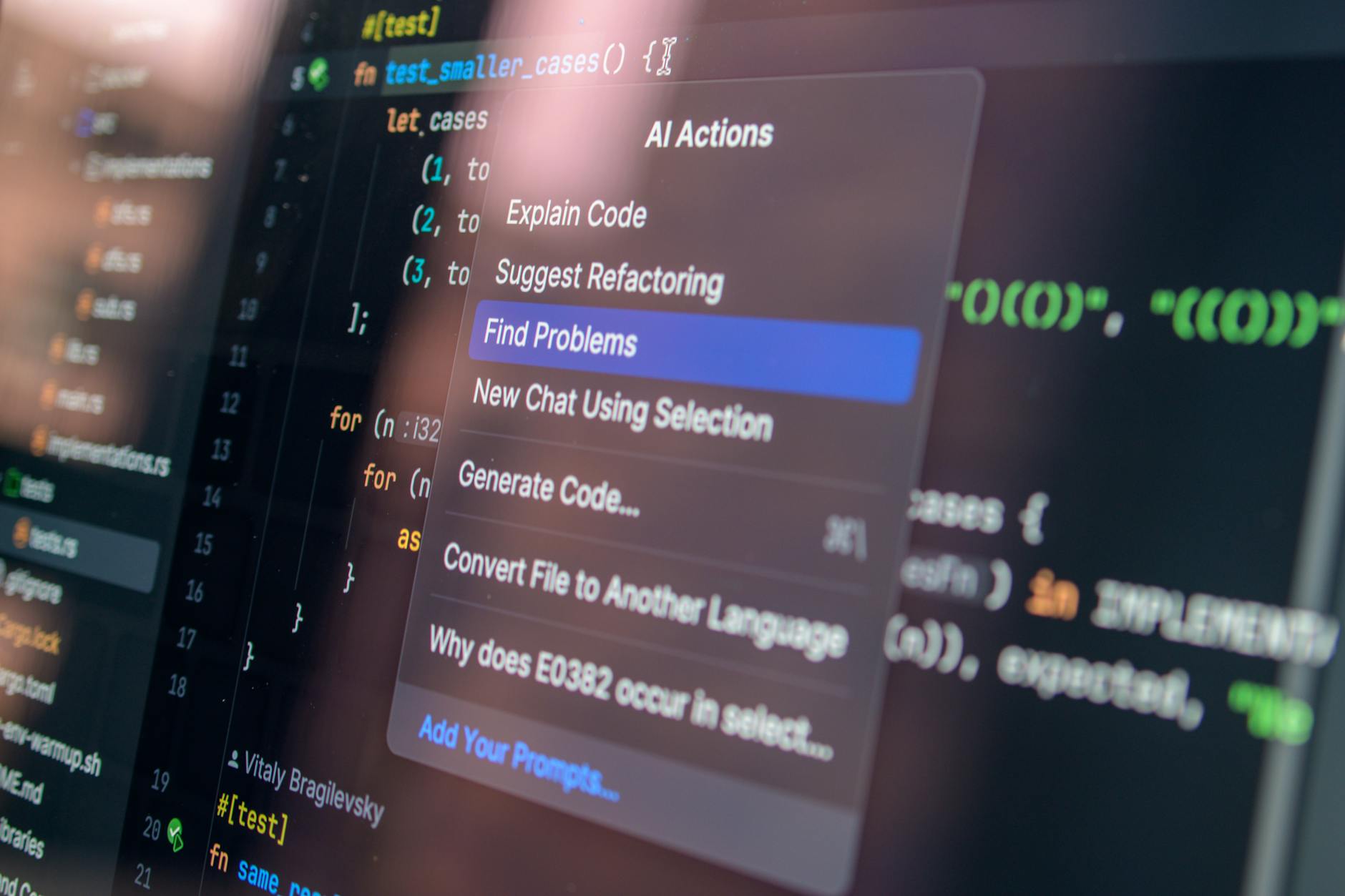
Most entrepreneurs invest in AI tools expecting an immediate 300% surge in efficiency, yet they often encounter a reality of fragmented data and escalating API costs. The misconception that a simple subscription to a large language model solves operational friction has led to significant waste in 2026 corporate budgets. The reality is that sustainable growth now requires autonomous agents and intelligent task orchestration rather than isolated prompt-and-response interactions.
What are Modern AI Tools in 2026?
In the current landscape, AI tools have evolved from simple chatbots into comprehensive cognitive automation suites that operate with minimal human oversight. These systems utilize Retrieval-Augmented Generation (RAG) to link proprietary business data with neural networks, ensuring that every output is grounded in specific organizational facts. This shift means that a machine learning model no longer just writes an email, it manages the entire customer lifecycle from lead discovery to CRM updates.
A practical application can be found in modern healthcare systems, such as those utilized by the Mayo Clinic, where predictive analytics engines analyze patient history in real-time. These algorithmic processing units assist clinicians by flagging potential complications before they manifest, effectively turning data into a proactive life-saving resource. This is the hallmark of 2026 technology: moving from generative toys to enterprise AI stacks that drive core business logic.
Core Benefits of Deploying AI Tools for Enterprise Growth
The transition to generative workflows has produced measurable outcomes across various sectors, moving beyond the experimental phase of previous years. Organizations that successfully integrate synthetic media generation and robotic process automation evolution see direct impacts on their bottom line through several key vectors.
- Operational Throughput: Early data from the McKinsey State of AI 2026 report indicates a 42% increase in output volume for firms using autonomous agents.
- Cost Reduction: By automating natural language processing (NLP) suites for customer support, businesses are reducing per-interaction costs by up to 65% while maintaining high satisfaction scores.
- Decision Velocity: Utilizing data-driven decision engines allows leadership to process market shifts in minutes rather than weeks, providing a distinct competitive advantage.
- Scalability: Cloud-based intelligence enables small teams to manage workloads previously requiring hundreds of employees, democratizing the power of large-scale operations.

Real-World Use Cases
E-commerce Inventory and Pricing
Modern e-commerce platforms now rely on multi-modal interfaces to manage visual and textual inventory data simultaneously. By employing adaptive algorithms, a hypothetical mid-sized retailer can adjust pricing across 50,000 SKUs every hour based on competitor stock levels and social media trends. This level of intelligent task orchestration ensures that margins are protected even during volatile market fluctuations, a feat impossible for human teams alone.
Logistics and Route Optimization
Global logistics networks have integrated edge computing AI to handle the complexities of last-mile delivery. By processing real-time traffic data, weather patterns, and vehicle health through deep learning integration, companies like DHL have optimized fuel consumption and delivery times. These automation software solutions act as a central nervous system for the supply chain, predicting delays before they happen and rerouting assets autonomously.
Legal Document Analysis
In the legal sector, LLM applications have moved into the realm of zero-shot learning frameworks, where they can analyze complex multi-jurisdictional contracts without extensive pre-training. Firms use these no-code AI platforms to audit thousands of documents for compliance risks in seconds. This allows senior partners to focus on high-level strategy while the algorithmic processing handles the exhaustive discovery and verification phases.
Statistics from IBM AI Insights show that 78% of legal professionals now use AI-driven research tools to reduce billable hours spent on manual document review by nearly half.
Challenges and Honest Limitations
Despite the rapid advancement, AI tools are not without significant pitfalls that can derail a digital transformation if not managed carefully. The most common failure point is poor data quality, where the underlying information used to train or prompt the system is biased, outdated, or unstructured. Without a clean data foundation, even the most expensive neural network integration will produce unreliable results.
Warning: Model failure risk is a critical concern in 2026. Without proper monitoring, 'Model Collapse' can occur when AI systems are trained on too much AI-generated data, leading to a degradation of logic and creativity.
- High Compute Costs: The electricity and hardware requirements for running enterprise AI stacks can lead to unexpected monthly overhead, especially for small businesses.
- Expertise Gap: There is a significant shortage of professionals who understand how to build smart workflows that bridge the gap between technical models and business outcomes.
- Data Privacy: Inputting proprietary intellectual property into public large language model applications remains a massive security risk, necessitating the use of local or private cloud instances.

Cost vs ROI Analysis
Understanding the financial commitment required for cognitive automation is essential for realistic planning. In 2026, costs are categorized by the depth of integration and the scale of data processed. While the upfront investment may seem high, the long-term efficiency gains often justify the expenditure within the first 18 months of operation.
- Small Projects ($5,000 to $20,000): Typically involves implementing no-code AI solutions like Zapier Central or Akkio to automate specific departmental tasks like lead scoring or meeting summaries.
- Mid-Market Integration ($25,000 to $75,000): Focuses on building proprietary data fine-tuning layers on top of existing models to create specialized internal tools for sales or marketing.
- Enterprise Deployment ($100,000+): Full-scale intelligent task orchestration across the entire organization, involving custom-built autonomous agents and dedicated hardware.
The ROI timeline generally follows a 6 to 18-month trajectory. Initial months are spent on data cleaning and model alignment, while months 6 through 12 see the first major gains in productivity. By month 18, the reduction in manual labor and the increase in lead conversion typically result in a full return on the initial capital outlay. For more on the economic shifts, see the latest TechCrunch AI reports on venture funding for automation startups.
When NOT to Use AI
It is tempting to apply algorithmic processing to every problem, but there are scenarios where it is counterproductive. You should avoid AI tools if your dataset is too small to provide meaningful patterns, as the model will likely hallucinate or overfit. If your business goals are unclear, adding automation will only accelerate your path to the wrong destination.
Furthermore, tasks requiring deep empathy, ethical judgment, or high-stakes physical safety should remain under strict human control. In 2026, the 'Human-in-the-Loop' (HITL) protocol is the gold standard for high-risk industries. If you lack the infrastructure to monitor and audit the AI outputs, the risk of reputational damage far outweighs the potential efficiency gains. Trust is harder to rebuild than code is to rewrite.
Future Trends in Automation
The horizon of 2026 and beyond points toward even more seamless neural network integration into our daily hardware. We are moving away from screens and toward ambient cognitive automation that anticipates needs based on environmental context. This evolution will likely redefine the very nature of 'work' for the next generation of professionals.
- Agentic Swarms: Multiple autonomous agents working together to solve complex problems without human intervention.
- Personal AI Sovereignty: The rise of locally hosted models that ensure total data privacy for individual users and small firms.
- Multi-modal Real-time Translation: Near-perfect verbal and visual translation integrated into wearable devices, as discussed in MIT Technology Review.
Frequently Asked Questions
What are the best AI tools for small businesses in 2026?
Small businesses should focus on no-code AI platforms that offer high flexibility without requiring a dedicated engineering team. Tools that integrate with existing CRMs and communication platforms provide the fastest path to value.
Is implementing AI tools expensive for a startup?
While enterprise-grade solutions are costly, many cloud-based intelligence services offer pay-as-you-go pricing. A startup can begin with an investment as low as $5,000 by targeting high-impact, low-complexity tasks first.
How long does it take to see ROI from AI automation?
Most businesses see a measurable ROI within 6 to 18 months. The first few months are usually dedicated to integration and training, with efficiency gains accelerating as the autonomous agents become more aligned with company data.
Can AI tools replace my entire marketing team?
No. While synthetic media generation can handle the bulk of content production, human oversight is still required for brand strategy, emotional resonance, and ethical compliance. AI acts as a force multiplier, not a total replacement.
Which industries benefit most from cognitive automation?
Logistics, healthcare, finance, and e-commerce are currently seeing the highest returns. Any industry that relies on processing large volumes of data or repetitive digital tasks is a prime candidate for intelligent task orchestration.
What is the biggest risk of using AI in 2026?
The primary risks include data privacy breaches, 'Model Collapse' from poor training data, and the 'Hallucination Trap' where the AI provides confident but incorrect information. Robust auditing and neural network monitoring are essential.
Conclusion
The successful deployment of AI tools in 2026 requires a strategic shift from using AI as a search engine to using it as an autonomous workforce. By focusing on agentic workflows and maintaining a clean data foundation, businesses can achieve unprecedented levels of scalability and efficiency. If you are exploring cognitive automation, start with a 2-hour audit of your most repetitive tasks before investing in high-cost enterprise stacks.