In April 2026, the professional landscape has shifted from simply using technology to collaborating with intelligent agents. For years, we struggled with the productivity paradox, where more tools seemingly led to more busywork. However, the maturation of AI-powered software has finally bridged that gap. No longer are we just 'prompting' a chatbot for a single paragraph, we are now orchestrating entire ecosystems of autonomous agents that handle everything from complex data analysis to client onboarding. Understanding how to integrate these AI tools into your daily operations is no longer an optional skill, it is the primary differentiator between high-performing entrepreneurs and those left behind in the manual era.
1. The 2026 AI Landscape: From Chatbots to Autonomous Agents
To effectively use AI-powered software today, one must understand the fundamental shift that occurred over the last eighteen months. We have moved beyond the 'Chatbot Era' into the 'Agentic Era.' While early versions of ChatGPT were impressive for their ability to generate text, modern artificial intelligence systems are designed to execute actions. These systems utilize machine learning to understand context, access external databases, and interact with other software interfaces just as a human would.
According to IBM AI Insights, the distinction between traditional logic-based software and learning-based AI is now the cornerstone of enterprise architecture. Traditional software follows a rigid 'if-this-then-that' structure, whereas AI-powered software operates on probabilistic reasoning. This allows the software to handle nuances, adapt to changing data, and solve problems that do not have a pre-defined path. In 2026, the most successful professionals focus on Retrieval-Augmented Generation (RAG), which allows their AI models to 'read' their specific business documents and provide answers grounded in reality rather than general internet training data.
2. Building Your 2026 AI Stack for Maximum Productivity
Creating smart workflows requires a layered approach to technology. You cannot rely on a single tool for every task. Instead, you must build an 'AI Stack' that addresses different facets of your business. In 2026, this stack typically consists of foundational Large Language Models (LLMs), specialized automation software, and no-code AI platforms that allow you to stitch them together.
- Foundational LLMs: Tools like OpenAI's GPT-5, Claude 4, and Google Gemini 2.0 serve as the 'brain' of your operation. They handle high-level reasoning and complex creative tasks.
- Agentic Orchestrators: Platforms like Zapier Central and Microsoft Copilot Studio allow you to turn these brains into 'doers' that can access your calendar, email, and CRM.
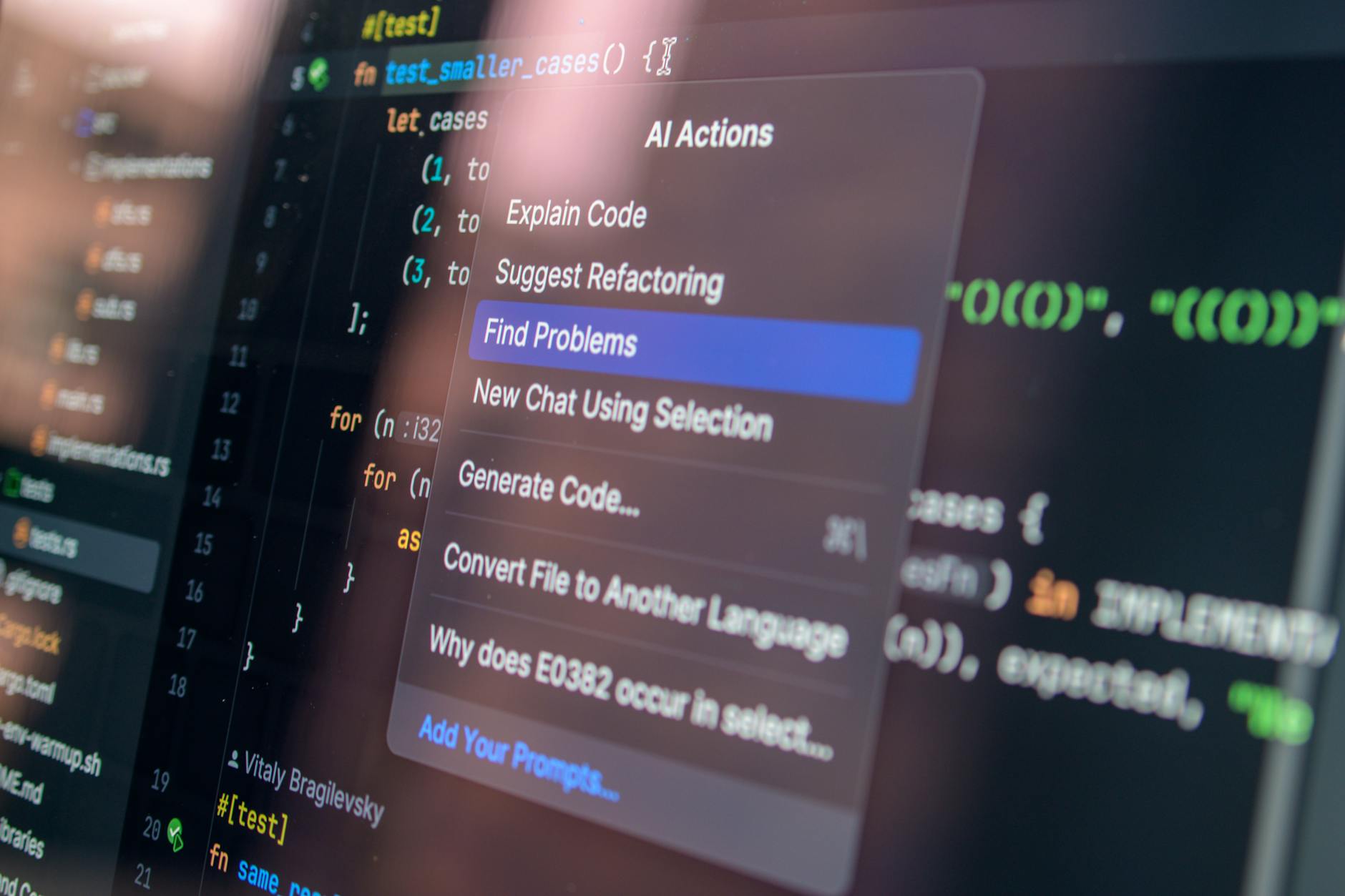
- Coding and Technical Tasks: For those building custom solutions, AI-native editors like Cursor and GitHub Copilot have made machine learning implementation accessible to non-developers.
- Knowledge Management: Systems like Glean or Notion AI use RAG to ensure that your AI-powered software understands your company's unique history and standard operating procedures.
3. Step-by-Step: Implementing AI-Powered Software in 5 Days
Transitioning to an AI-first workflow can feel overwhelming. However, by following a structured 5-day implementation plan, you can modernize your business without disrupting your current operations. This guide focuses on productivity automation and practical application.
Day 1: The AI Audit
Start by listing your top five most repetitive and time-consuming tasks. For most professionals in 2026, these are email management, meeting summarization, data entry, social media scheduling, and initial research. Once identified, search for AI tools specifically designed for these niches. Do not try to automate everything at once, focus on the 'low-hanging fruit' where automation software can provide immediate relief.
Day 2: Prompt Library and Brand Voice
Consistency is the enemy of generic AI output. Spend Day 2 creating a centralized 'Prompt Repository' in a tool like Notion or a dedicated internal wiki. Define your brand voice, your preferred coding style, and your standard report formats. By providing these as 'System Instructions' to your AI-powered software, you ensure that every output feels like it was created by a member of your team rather than a generic machine.
Day 3: Connecting Your Ecosystem
This is where no-code AI becomes your greatest asset. Use tools like Make.com or Zapier to build bridges between your apps. For example, create a workflow where a new lead in your CRM triggers an AI agent to research the lead's company, summarize their recent news, and draft a personalized outreach email for your review. This workflow automation turns a 30-minute manual task into a 30-second review process.
Day 4: Security and Data Grounding
In 2026, data privacy is paramount. Ensure you are using 'Enterprise' versions of your AI tools to prevent your proprietary data from being used to train public models. Set up a RAG system that connects your AI to your internal files. This ensures that when you ask the software for a project update, it is looking at your actual project management software, not hallucinating based on general knowledge.
Day 5: The Human-in-the-Loop Review
Never fully automate high-stakes tasks without a human checkpoint. Spend your final day refining your 'Human-in-the-Loop' (HITL) protocols. Determine which tasks require a final 'eyes-on' review before being sent to a client or published. This balance ensures that you maintain the 'human touch' while benefiting from AI productivity gains.
4. Best Practices for Modern AI Productivity
To get the most out of your AI-powered software, you must move beyond simple requests. Expert users in 2026 employ 'Chain of Thought' prompting and iterative refinement. Instead of asking the AI to 'write a report,' ask it to 'first outline the report, then identify three key data points for each section, and finally draft the content using a professional tone.'
Recent studies highlighted by the McKinsey State of AI report suggest that businesses implementing these structured agentic workflows see operational cost reductions of up to 30%, particularly in departments like customer service and data processing.
Furthermore, always audit your processes before you automate them. Automating a broken or inefficient process only results in 'faster' mistakes. Map out your manual steps, identify the bottlenecks, and then apply machine learning solutions where they can provide the most leverage. This strategic approach to smart workflows is what separates the leaders from the laggards.

5. Avoiding Common Pitfalls: The 'Black Box' Trap
As AI-powered software becomes more autonomous, there is a temptation to treat it as a 'black box' where you put data in and get results out without understanding the logic. This is a dangerous mistake in 2026. Always verify the citations and data points provided by your AI. While ChatGPT alternatives and advanced models have significantly reduced hallucinations, they are still reasoning engines, not factual databases. Use them to process information, but verify the source material for high-stakes decisions.
Another common error is over-automation. While automation software is excellent for efficiency, it can often strip the personality and empathy from your business. In 2026, consumers value 'human-verified' content and personalized service more than ever. Ensure that your AI-powered systems are enhancing your human capabilities, not replacing them entirely. For more on the ethical and technical challenges of this balance, keep an eye on TechCrunch AI for real-time updates on industry shifts.
6. The Rise of Small Language Models (SLMs)
While the massive models from OpenAI Research dominate the headlines, the real secret weapon for savvy professionals in 2026 is the Small Language Model (SLM). Models like Mistral's latest iterations or Microsoft's Phi-4 are now powerful enough to run locally on a high-end laptop or a private server. This shift is a game-changer for AI productivity and security.
Running AI-powered software locally means that your data never leaves your device, ensuring 100% privacy and allowing you to work offline. These models are faster and cheaper to run than their cloud-based counterparts, making them ideal for high-volume tasks like analyzing thousands of customer feedback entries or local code refactoring. As noted by the MIT Technology Review, the trend toward decentralized, efficient AI is the next frontier for personal and professional automation.
Frequently Asked Questions about AI-Powered Software
What is the difference between AI-powered software and traditional automation?
Traditional automation follows static rules (if-then), while AI-powered software uses machine learning to adapt to new data and perform tasks that require reasoning and context, such as summarizing a complex meeting or writing code.
Can I use AI-powered software for sensitive client data in 2026?
Yes, provided you use Enterprise-grade tools or local Small Language Models (SLMs). These versions offer data privacy guarantees that prevent your information from being used to train public models.
What are the best ChatGPT alternatives for business?
In 2026, top alternatives include Claude 4 for creative and nuanced writing, Gemini 2.0 for deep integration with Google Workspace, and Mistral Large 3 for high-performance, cost-effective reasoning.
How much productivity can I really gain with AI tools?
Research from MIT and Harvard indicates that professionals using AI-powered software correctly can see productivity gains between 25% and 40% in writing, coding, and administrative tasks.
Do I need to know how to code to use AI-powered software?
No. The rise of no-code AI platforms has made it possible for anyone to build complex agents and workflows using natural language and drag-and-drop interfaces.
Conclusion: Embracing the Agentic Future
The transition to AI-powered software represents the most significant shift in work culture since the invention of the internet. By moving from manual execution to agentic orchestration, professionals can focus on high-level strategy and creative problem-solving while leaving the repetitive 'drudge work' to their digital counterparts. Whether you are using no-code AI to automate your sales funnel or leveraging local SLMs for secure data analysis, the goal remains the same: to use artificial intelligence as a force multiplier for your human potential. Start your 5-day implementation plan today and secure your place in the future of work.